Archive for enamelist

Place as Landscape / Place as Concept: Contemporary Enameling in the U.S.


We are delighted to announce the exhibit “Place as Landscape/Place as Concept: Contemporary Enameling in the U.S,” from January 15 – March 8, 2019.

Please join us for the opening reception on Saturday, February 2 at 2pm.

Mounted in conjunction with Richmond Arts Center, the exhibit examines the idea of place from an American perspective.

These works in enamel–by established and emerging artists alike, using a range of traditional and experimental techniques–explore place as as a way of understanding who we are. By turns complex, conflicted, melancholy, and beautiful, these images and objects show us our country as well as ourselves.

This exhibition expands upon the American showcase presented at BLAZE: International Contemporary Enamel Exhibition at the National Taiwan Craft Research and Development Institute in Taipei (May-August, 2018).

Artists: Ken Bova, Harlan Butt, Katy Cassell, Kat Cole, Helen Elliott, Danielle Embry, Greg Flint, Kristina Glick, Gretchen Goss, Janly Jaggard, Sarah Loch-Test, Sharon Massey, Cynthia Miller, Pat Musick, Gail Reid, Rene Roberts, Averill Shepps, Jan Smith, Judy Stone, Don Viehman, Carly Wright

For press inquiries and images please contact the Center for Enamel Art at info@enamelcenter.org.

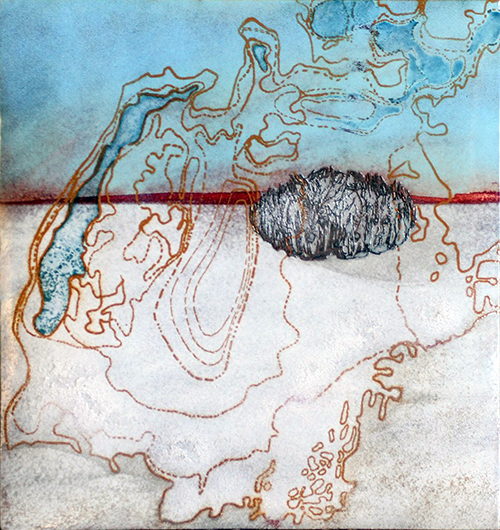
Image: Katy Cassell, Lost Sea, 2016. Enamel, copper, reflective glass beads, mounted to wood.

Surface, Color, Form: We Talk With Kathryn Osgood About Her Boundary-Pushing Work

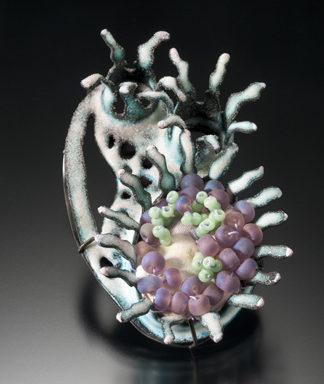
Brooch, Kathryn Osgood

Kathryn Osgood worked as an engineer for a small, family-owned telephone company in rural Maine for almost 20 years before starting a second life as an artist, jeweler, and enamelist. After studying with Linda Darty and Bob Ebendorf at East Carolina University, she moved to the Outer Banks of North Carolina, where she heads the Professional Crafts Jewelry Program at College of The Albemarle in Manteo

Osgood’s work pushes the boundaries of enameling, using fold-forming, varied surfaces, and non-traditional materials to create tactile, sculptural pieces. Osgood will share her expertise in her upcoming workshop, Enamels: Exploring Texture, Color and Form. The workshop runs from May 18 – May 20, 2018, at the Crucible in Oakland, CA.

There are still slots available in this workshop–register now!


What drew you to enamel as your preferred medium?

I have always loved color. It elicits an emotional response from the viewer; it can be calming, sensual, exciting, joyful. Before I became a jeweler and enamellist, I was working as a textile artist, doing surface design, painting and dyeing fabric and creating wall hangings and quilts. When I took my first metals class, I was hooked. I loved working with metal; how it allowed me to create dimensional work. It could be hammered, shaped, and formed.  I fell in love with the material, but I really missed the element of color.

When I discovered enamel, I found a way to bring color back into my work. Layering opaque and transparent enamels allows me explore an almost unlimited rich color palette.
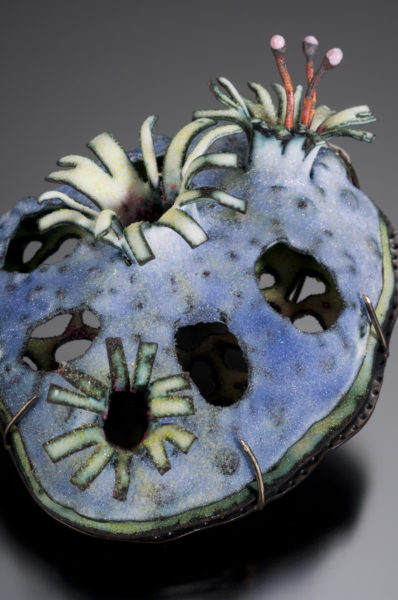
Ocean Brooch, Kathryn Osgood

How did you become intrigued with textured dimensional surfaces?

When I began working with metal and was fabricating jewelry from sheet metal, I was not satisfied with the idea of decorating a flat surface.  I wanted to create pieces that were more sculptural, to take advantage of the plasticity of metal, of its ability to be formed into organic shapes.  I began exploring the natural forms around me: magnolia pods, pine cones, leaves.  I was intrigued by the textures found in nature and I wanted to replicate them, creating pieces that were more organic.

I enjoy exploring ways to from metal by hammering, dapping, bending, fold forming, shell forming, and die forming.  I like my pieces to have a tactile quality, to invite the viewer to touch.  I want them to feel good, to entice with both texture and color.

Who have been your mentors?

There are so many talented enamelists whose work inspires me, so it is hard to just name a few.

I was lucky enough to study at East Carolina University with Linda Darty and Bob Ebendorf.  Linda Darty introduced me to enameling and the world of color on metal. Linda is a master enamellist and she generously shared her extensive knowledge of enameling and was a supportive and encouraging teacher. Linda continues to impress me with her beautiful work and with her love for the art of enameling. Bob Ebendorf is also a mentor and generous teacher. His knowledge of metalsmithing and his adventurous creative spirit continue to inspire me in living a creative life.
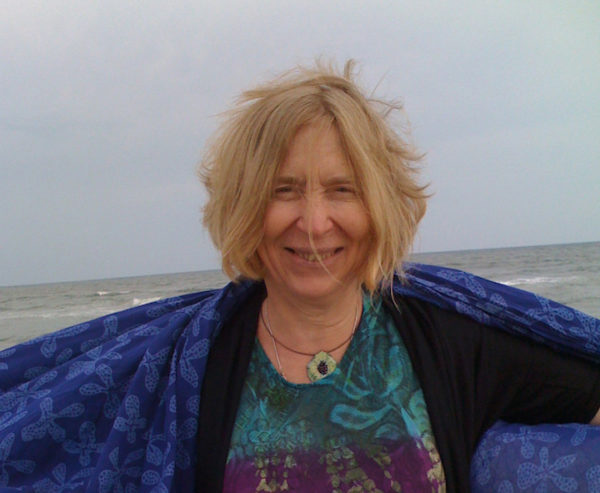
Osgood on the North Carolina coast

What inspires your work?

I live on Roanoke Island, off the coast of North Carolina. Since moving to the Outer Banks area, my work has changed to reflect my environment. The colors and textures of the sand and the water that surround my coastal home inform my work. In the early mornings, I often walk on the beach with my dog, Lola, picking up pieces of shells and driftwood that have washed in with the tide.  My pieces are based on marine plant and animal forms, their textures and colors informed by the shell fragments that I have collected.

 Find more of Osgood’s work on her website.

Harold Balazs, True Artist, True Friend

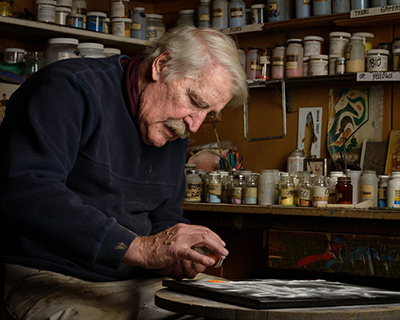
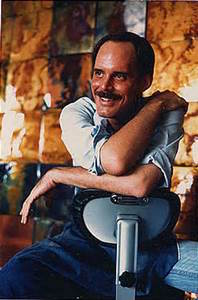
Balazs at work in his studio, 2002. Photo by Rajah Bose

With the death of Harold Balazs, a wonderful enamel artist who worked beautifully in many media, the art and craft community has lost not only a tremendous talent but a true friend. Balazs passed away on December 30, 2017, at the age of 89.

His career over the years was that of a resourceful, versatile, and multi-talented artist. Originally from Ohio, where as a child he encountered the work of enamel artist Edward Winter, he studied fine art at Washington State College, where his family moved in the 40s.

He earned a living with a combination of production work and commissions: enameled jewelry, architectural  designs, public sculpture, posters, paintings and drawings. He left a legacy of public art throughout Spokane. His work can be found everywhere in the city, from churches to corporate headquarters.

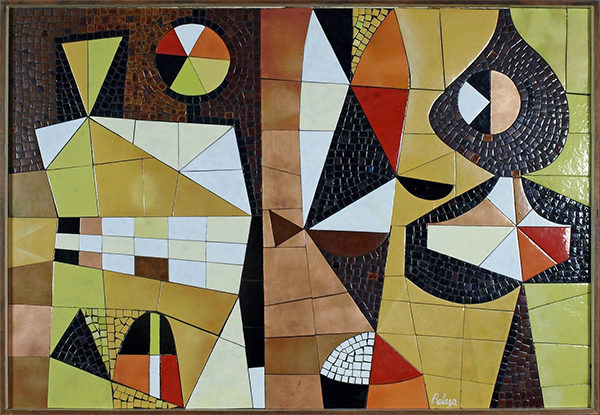
Large mosaic style panel, 1950s

But Balazs also left another, less visible legacy: He was an incredibly generous mentor to young artists, providing generations with encouragement and studio space. Center for Enamel Art founder, Judy Stone, was a close friend of Balazs.

“I met Harold in the early 90’s when I attended the Pacific Enameling Symposium in Seattle,” says Stone. “At the time I was feeling my way into a very established enamel community and was wondering how I could fit in and whether my work was any good. Based on Harold’s demeanor as he taught, created collaborations among students and answered questions, I decided to ask him if I could show him some of my work at the end of the symposium. I was scared, but felt Harold would do his best not to hurt my feelings. His critique was loving, constructive, and tremendously positive. From then on I considered Harold a mentor and a friend.”

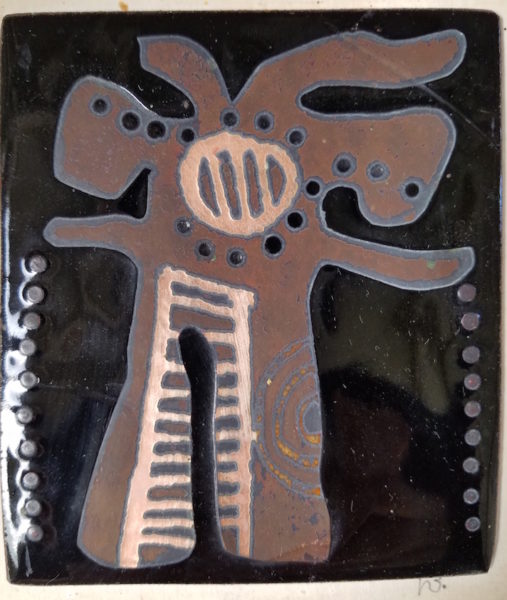
Balazs gave this piece to Center founder Judy Stone. Enamel on copper, 4″ x 4.5″

“In 2003, when I was co-coordinating the Enamelist Society Biennial conference ‘On the Edge’, we asked Harold to be our keynote speaker,” recalls Stone. “His keynote, like the man himself, was about matters much bigger than himself and enameling. He talked about art and craft education in K-12–which at the time was getting slashed from many school budgets–saying that art was as important to human development as breathing.”

Balazs was that rare breed of artist — dedicated to art as a process and a way of life, not just for himself but for others, too. Of the many beautiful works he left us, that may be his greatest. “To the very end,” says Stone, “Harold lived his life as someone who cared about others succeeding.”

How Now Fred Ball?

The Center for Enamel Art is excited to host a guided bus tour on Saturday, June 25, of the work of noted Sacramento enamel artist Fred Ball.

To learn more and to register, click here


Ball sitting in front of tiles for The Way HomeFred Uhl Ball: The Legacy of a Pioneering Artist
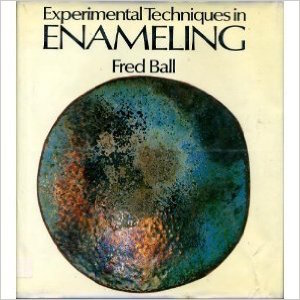
Recently, I have been wondering about the legacy of one the most important American enamelists of the 20th century, Fred Uhl Ball (1945-1985). I never met him, though he lived, worked and taught in Sacramento, CA, about an hour from my home, and frequented the supply store in San Francisco where I bought my enamels. But even in absentia, Ball was a mentor to me. His book, Experimental Techniques in Enameling (1972), came out the same year I began enameling professionally, and formed the basis of my journey into enameling.Ball book cover

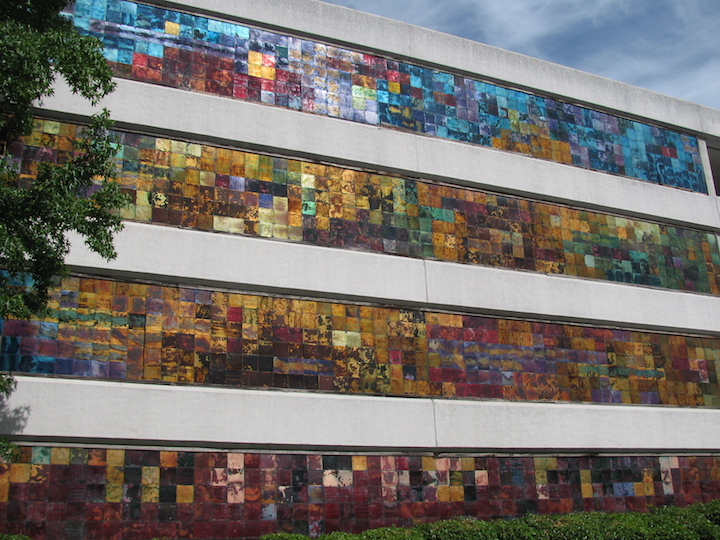
It was easy to be affected by Ball back then — his influence and presence resonated throughout northern California. He was an icon, the son of well-known Sacramento artists, and thoroughly of the area in which he lived. His work was commissioned and collected by a variety of patrons, and he produced several large-scale wall commissions for both public and private spaces. The most recognizable of his pieces, The Way Home, was installed on the side of a large parking garage in downtown Sacramento, and for many years was the featured image on the front of the Thompson Enamel catalogue.

Fred Ball's The Way Home on side of City parking garage Sacramento

“The Way Home,” installed on the side of a municipal parking garage in Sacramento

An Untimely Death

Ball died young, at a time when his potential seemed limitless. Read More →